Tuesday, October 19, 2010

Weeks Too Late: Deadgirl

Deadgirl. Directed by Marcel Sarmiento & Gadi Harel & written by Trent Haaga.

Preconceptions: What's that horror movie genre? You promise that if I check out just one more new horror flick that it'll be different? You've changed, you say? It's all been a horrible misunderstanding and that I should have a look at Deadgirl? It only runs an hour forty and I should take that as a good sign? Well as you cupcakes know, the horror genre has never lied to me in the past, so I've clearly got no reason to be skeptical about Deadgirl. Tra la la, let me blithely just check it out, then.

General Review: I hadn't heard of Deadgirl until Doomwench recommended I give it a watch (which immediately made me suspicious that she was, once again, trying to prove to me that most horror movies suck), so a brief plot summary: two teenage boys find an experiment in an abandoned mental hospital. That experiment? A feral, naked woman who can't die. Horrific things ensue. While I do have a few problems with Deadgirl (shockingly) I will say this: it doesn't mess around with the ensuing. At exactly 18 minutes in we've stopped watching teen drama squad and have gotten straight into the horror. If only other movies realized that this is what works unless you're going for something extraordinarily clever, which 9.9 times out of 10, you aren't (even if you believe you're being clever, M. Night Shyamalan) .

I spent the first half of the movie being mightily irked that every single character was unrelatable. The nicest of the boys, Rickie, was only barely less reprehensible than the rest of them. He's stalk-y, obsessive and unwilling to stand up to his slightly more evil friends, J.T. and Wheeler. Also, as a side note, I tend to be unwilling to buy the squinty faced pouty snarl from any character, let alone one who's just a teen boy rather than an immortal vampire. The above mentioned Wheeler is stupidly evil and J.T. directly so. JoAnn, the girl Rickie is slavering after, is a ditsy apologist for her stereotypically aggressive, jock boyfriend. Finally, the character Deadgirl (Jenny Spain) is a snarling, mute, abused victim (and one of the more skillfully portrayed characters in the movie). You see the problem I was having. I may come off as seeming dim, but it took me the first half of the movie to realize I wasn't supposed to identify with any of these characters. This movie attempted to walk that difficult line of having an interesting story with no likable people in it. While I was on board with this toward the end of the flick, my irritation throughout shows that it didn't perfectly walk that tightrope.

In a lot of ways Deadgirl reminded me of Teeth (the movie closest to a horrordy that my unsophisticated palate can still enjoy). Overall, Teeth was a better movie, but both of them did what horror can do best: take something already horrifying, like teenage sexuality and grotesque it up into disgusting hyperbole. Sexuality, at its worst, can be violent and frightening on its own, adding elements of monster movies means that these issues can be explored in new ways that aren't the same dull after school specials. Deadgirl takes rape, an already repellent topic, to even more repulsive extremes that have remained with me days later. That is what good horror should do, stick with you and hit you with thoughtful nausea later in the week.

As you've probably noticed, I enjoyed the broad strokes of Deadgirl. Unfortunately, some of the finer details lose me. The dialogue was as unbearable as the badly translated foreign films I've been watching lately. "Fuck, c'moooon, man....I mean, fuckin' c'mon!" is the type of grunts and moos that pass between our leads. In many scenes they might as well have been growling and barking for all the meaning that was in their dialogue. I'm well aware that this could have been done on purpose to mock the slang and curse filled speech that certain old lawn aficionados think make up teenage dialogue. It also might be intended to be a response to the less realistic, but more clever, Whedonesque style of writing. Those intentions are all very well and good, but what you're left with is intercourse (heh) that's painful to listen to. Maybe it would have been better if delivered by more talented and seasoned actors, but the writer must have known this movie, by its very nature, would be in the hands of a young, callow cast. The cast wasn't exactly incompetent, but they needed stronger writing to carry their lesser skills.

Finally, it was a nice change of pace to have a zombie movie where zombies aren't actually mentioned. While I've enjoyed the rash of fourth wall busting zombie flicks that have come out lately, I think all the juice has been squeezed out of the "having the characters know exactly what to do in the zombie apocalypse" fruit. It was good to see people not know exactly they were dealing with, again.

Deadgirl isn't that perfect horror movie I've been waiting for all my life (I think the original Stepford Wives might be the one that got away...which actually makes me wonder if I should be questioning my movie choice sexuality). I don't usually read other reviews of movies I intend to look into, but I couldn't help peeking this time. I'm not surprised to hear that other reviewers found it misogynistic and desperate to shock the audience, because, well, it is. It shocked little old desensitized me and I was gnashing my teeth at the hateful characters. But I got the feeling that the creative team wanted me to feel this way. They got both my hackles and my lunch up and in that, Deadgirl is one of the more stirring horror movies I've seen come out of the west in a long time. It was effectively disgusting and hit me so viscerally that there are scenes I won't be forgetting anytime soon. If you're like me and don't feel like you've really gotten the price of admission for a horror unless you feel that you've been beaten about the head and guts, I think you'll dig Deadgirl. It's disquieting, brutal and scary.

Aside: Also, do you guys remember this Naked Ape video?

Saturday, October 16, 2010

Girl on Book Action: Dreadnought by Cherie Priest

Dreadnought by Cherie Priest
ISBN: 978-0-7653-2578-5

Blurb:

Mercy Lynch is working at a war hospital in Richmond, Virginia, when she learns that her husband has died in a POW camp and her estranged father is gravely injured and wishes to see her.  With no good reason to stay in Virginia, Mercy sets out to see her father in Seattle.

But crossing the country is no small task; it’s a harrowing adventure through war-torn border states by dirigible, rail and the Mississippi River.   What ought to be a quiet trip turns deadly when the train is beset by bushwackers, then vigorously attacked by a band of Rebel soldiers.  The train is moving away from battle lines into the vast, unincorporated west, so Mercy can’t imagine why it’s meeting such resistance.  Perhaps it has something to do with the mysterious cargo in the second and last train cars?

Mercy is just a frustrated nurse who wants to see her father before he dies.  But she’ll have to survive both the Union intrigue and Confederate opposition if she wants to make it.

***

Many moons ago, I reviewed a book called Boneshaker and ever since I've been waiting for the follow-up novel to reach my hungrily awaiting shelves.  Lo and behold, here it is and along with it, comes my review.

Now, I'll start with my gripes and then tell you about how lovely I think the overall novel is, so sit tight.

First, I’m not a fan of that back-cover blurb, and I feel that it reveals too  much of the plot.  Therefore, I've edited it before posting it here and removed the spoilers.  I actually didn’t read it until after I’d finished the novel so I wouldn’t have as many expectations going in as I would otherwise.  This complaint really has little to do with content and more to do with packaging, so make of that what you will.  I’m a picky creature.

Second, well, that’s harder to explain.  As the blurb tells you, Mercy is widowed.  If you recall, Briar Wilkes in Boneshaker is also widowed, which left me wishing for a little more variety in characters.  Part of me understands that in writing about a prolonged Civil War and a world where there are zombies widowhood is going to be rampant, but another part wishes for a strong female lead that wasn’t a lone female because her husband has died.  Maybe my desire for this kind of leading lady is too modern for this historical setting.  Another issue I have with Mercy’s widowhood is that she spends all of an afternoon mourning her husband.  Her lack of emotional melt-down is explained by her not having seen him in some time. They had only been married a brief 8 months before he went to war. Still, this explanation didn't sit well with me.  Once she was on her way and in Union territory, her dead husband just became a tool to use so she would be accepted as part of the Union, rather than being from the Confederate states. 

Lastly, in the complaints department, is something that you might read as a spoiler, so if you care about this sort of thing you may want to stop reading…now.  So, we spend a good 390 pages on this journey to see Mercy’s ailing father and the book is only 400 pages long.  Can you see where I’m going with this?  If you were thinking that my complaint is along the lines of there not being a lot of emotional pay-off at the end, you might be right.  She meets her father and then the book ends; we don’t even get to see their first conversation.  I suppose there is something to be said about the importance of the journey over the destination, but I wanted more here – like maybe an explanation of why he abandoned his family when Mercy was a little girl.  (Okay, so there is a chance that some of this was explained in Boneshaker where we met Mercy’s dad Jeremiah, but if we did, I very much don’t remember it, so a refresher might have been nice).  Anyway, I wanted some more closure.

And I’m now done with spoilers, so you can continue reading.

On to the good things!

Remember how Boneshaker was printed with brown ink?  Well, Dreadnought is as well, which means I loved the look of the book.  We all know that I’m a sucker for this type of thing.

As much as I took issue with some of Mercy’s doings, for the most part I found her to be engaging and well-portrayed.  I cared about her well-being, even if I felt she could have used a touch more emotional depth.  The other characters were memorable as well, especially the stoic Horatio Korman and the at times infuriatingly irritating Miss Clay.  Actually, even the side-cast and people we only met briefly along the way seemed like real people.  It made the world seem alive rather than being a place that exists only on paper and in the imagination.  Also – there was no romance.  I know that perhaps the lack of a romance in a story shouldn’t be a high-point, but with all of the romance-driven plots these days, reading something that has no hint of a love-relationship is a breath of fresh air.

The pace was really good, too, quite quick and I had a hard time putting the book down.  In fact, I lost track of time on a couple of occasions while reading, because I’d finish a chapter and just have to read the next to find out what was happening, which to me is a true sign of an immersive universe.

Lastly, the machines were neat and I do sort of wish we'd seen a little more of the Walkers that are mentioned early on, but the ride on the Dreadnought and its steam-powered goodness was nifty.

I know that it seems that my complaints are much longer than my praise, but truly, this novel was delightful.  It’s a very solid follow-up to Boneshaker, and I think actually a better book, because it felt more mature.  No second act jitters to be found here (although I suppose Clementine might be considered the second act).  I can say with certainty that I will be purchasing Clementine when it’s out in paperback next year, and I’ll be picking up the next Clockwork Century novel whenever it’s out.

Aside:  If I've piqued your interest in Cherie Priest's work, I've also reviewed her novel Fathom.

Tuesday, October 12, 2010

Weeks Too Late: The Seven-Per Cent Solution

The Seven-Per Cent Solution: Being A Reprint From The Reminiscences of John H. Watson, M.D. Written by Nicholas Meyer.

Aside: That's right, we've done it again, and clearly we've planned this all out, despite what Doomwench says. We're meticulously organized over here at Girl on Book Action. Besides, every once in a while it's important for me to show my co-writers that I can, in fact, read. Plus, it's also fun to freak you out, my little cupcakes.

Preconceptions: True to my words way back in January (I'm nothing if not an honest reviewer-hmm, how sad for me) I decided to look up the Sherlock Holmes novels and short stories. They turned out to be a gateway drug and after a few months of picking away at them, I started seeking out movies and television series (don't be shocked if a few of those end up creeping onto here) starring my new favourite weirdo detective. Digging around for new material led me to the famous (to everyone but me) fan-fic, the Seven Per-Cent Solution. Despite knowing this is a well-loved book and not having to pick off any rotten tomato off the cover, I was still skeptical. It is, after all, someone else trying to write in Doyle's style. While I've read some good books with Holmes appearing in them, writing a story that is supposed to fit into the canon works is something altogether more difficult (just look at the new Hitchiker's book, or rather, don't).

The Plot: In case I'm not alone in having never heard of it, the conceit of the book is that an unpublished Holmes adventure has been discovered and edited by Meyer. What makes this new case particularly interesting is that Holmes has gone from occasional cocaine use when he was bored, to a full time addict. Watson, ever faithful, sets out to find treatment for his friend. And who is clever enough to treat the detective? Sigmund Freud (My other favourite weirdo detective and the only other man up for the task, Batman, not having been born yet).

General Review: Having just glutted on the original Holmes, I was surprised to see how close in tone this book was to the source material. Though admittedly, I'm only a fan and not an expert I didn't find myself yelling to an empty room (or worse a full one) that "Sherlock wouldn't say that!" More importantly, Watson's voice remained nearly unchanged. There was great skill in keeping the style and language (right down to the juvenile snicker-worthy use of "ejaculate") choices consistent. However, though my most major concern was laid to rest, there was too much neatness and fan service. Not every boat and train station needs to be one we've seen in original books. Along the same lines, while fan-girl me was delighted to see Toby (the lovably ugly tracking dog) back in action, harsh-critic me thought any unnamed bloodhound would do, not to mention be less pandering. There was one other notable change and it was one I couldn't bring myself to dislike. Holmes was the tiniest bit nicer to Watson. This could be explained by a more enlightened Holmes, or simply one who'd been weakened by his condition, but as a long time Watson fan I was happy to let this go.

The Sherlock stories have led to volumes of speculative essays about the characters. This is interesting on its own and was sort of like an academic version of a message board discussing the culture of the Romulans. What the Seven-Per Cent Solution did best was take some of the great ideas considered in those essays and weave them into a coherent story. We learn more about Sherlock's past and Watson's family life, and the information seems believable because the germs for these ideas were extrapolated from the source books.

Perhaps because this was so true to the original books, once the mystery was solved the story lost most of my interest. The last thirty pages of exciting chase scene didn't have much sparkle. Doyle learned early on to keep some of the deductions for the end of the story to keep the reader engaged, Meyer didn't take this lesson to heart. Maybe he thought a swashbuckling, chase scene (and one on speeding trains no less) would be enough to keep the audience engaged. By all rights it should have been, but in a Holmes story the mystery is always more compelling than the action. It was worth getting through, however, because we came back to the the mystery of Sherlock's psyche, being untangled by Freud. All in all, there wasn't enough delving into that particular mystery. The glimpses we got of Freud treating Sherlock were compelling, but they were also brief. One of the book's few missteps was not showing us more of these two characters just talking. It might seem less exciting than jumping from speeding trains, but it wasn't.

The Seven Per-Cent Solution was a great nightcap after reading the Holmes series. It tied up some loose ends and answered a few lingering questions in a way I bought. Be warned, however, that as a stand alone book, it would lose a lot of its power. I don't think you need to have read the entire Sherlock catalog to enjoy it, but if you haven't read a couple of them then you'll be missing out. That is the trouble with writing something this tied to the source material, without that background, it's really only half a book. Yes, it would be a coherent narrative, but it wouldn't be a very interesting one.

Another Aside: Those of you who know me are probably sick of me recommending this comic (and its sequel) by Kate Beaton over at Hark! A Vagrant, but it's still one of the biggest Holmes laughs I've ever had.

Saturday, October 9, 2010

Girl on...Movie? Action: The Countess


The Countess (2009)
Director: Julie Delpy
Writer: Julie Delpy


Aside:  What's this? Doomwench is reviewing a movie?  Well, my dears, things around here have been hectic and as such there has been NO time for reading.  Luckily, I had this little gem sitting in my backlog still.  So, yes, you get a movie review for once.   Enjoy it while it lasts.

Preconceptions: I’ve said it before, and I will say it again – I love period pieces, especially when it comes to movies, although this also applies to books. I’m also always looking for new and exciting vampire-related things and the Countess Bathory qualifies in this category. I was looking forward to a period-piece foreign film about the bloodthirsty, youth-obsessed woman. That said, I wasn’t exactly expecting a master-piece, but even my somewhat low expectations were disappointed.

My Review:

There were so many BAD elements of this movie that I'm not sure which was the worst. The main culprits are the acting, the script and the strange accents everyone felt they needed to use, none of which matched with any others. Since it's probably a combination of those elements, I’ll say it was bad directing. When the director is also the writer I tend to worry about the quality of the movie, and when it turns out said director and writer is also the main actress I begin to think that the movie is all about appeasing someone’s ego.

So, let me talk about the acting in specific. It was pretty terrible – there were a few believable scenes across the board, one that springs to mind is when Erzebet (Delpy) grabs a young girl she recognizes and tells her to run away. I believed the mad despair in that scene, but that was about the only time. Delpy felt wooden for most of the movie, as if she was some sort of Hoffmanian automaton. Her lover and also narrator of the film, Istvan Thurzo (Daniel Brühl who you might recognize from Inglorious Basterds) was pretty terrible and came across as creepy rather than seductive or alluring. He definitely didn’t make me believe that anyone could fall so madly in love with him that she would start murdering virgins. His performance was probably the most disappointing, since I thought he was good in Basterds. I guess it shows what a good director can do. The only other character worth mentioning is Dominic Vizakna (Sebastian Blomberg) who was so unrealistic that he bordered on a parody, which I doubt was the intention. I think he was meant to be a mysterious, dark paramour drawing Erzebet to the dark side, but Blomberg did not have the acting chops to pull that off. His scenes mostly made us laugh.

The accents were inconsistent and generally bad, enough said.

I did like the sets – the castle was appropriately imposing and isolated – and the costumes, at least for the women were nice. I do have to say that at times Iztvan’s jackets looked like they were made from some nice curtain brocade. Erzebet’s dresses were beautiful, though I can’t say how time-appropriate they might have been.  Historically accurate or not, I liked them quite a bit.  As much as the dresses were pretty and the sets appropriately imposing, these things to do not make a solid movie, they are just window-dressing.

The plot was straight-forward, even though it was trying to be filled with political intrigue and personal agonies. I think in the hands of a better director with stronger actors it could have been something really amazing, if not necessarily unique. Given the weakness of the acting and the script, stronger focus on the murdering would have helped keep an audience interested – if you can’t woo them with brilliant performances, entrance them with gore, it works for the Saw movies after all.

Let me add one more positive thing to this review. Some of the shots were quite nice – I remember especially the sequence toward the end when Bathory is being walled into her room and you see her silhouetted against the outside world and the two men who put her there. That was effective. There were a few other similarly picturesque images, but none that stand out as much as that one.

Overall, if you can get it for free and want to spend an hour and a half cringing at the terrible dialogue with the off-kilter accents, go for it. If you’d rather use that hour and a half to do something, anything else, I won’t hold it against you. Definitely don’t spend any money on renting or buying it. You can find something better to spend your pennies on, trust me.

Tuesday, October 5, 2010

Weeks Too Late: The Hexer

The Hexer. Directed by Marek Brodzki & written by Michal Szczerbic

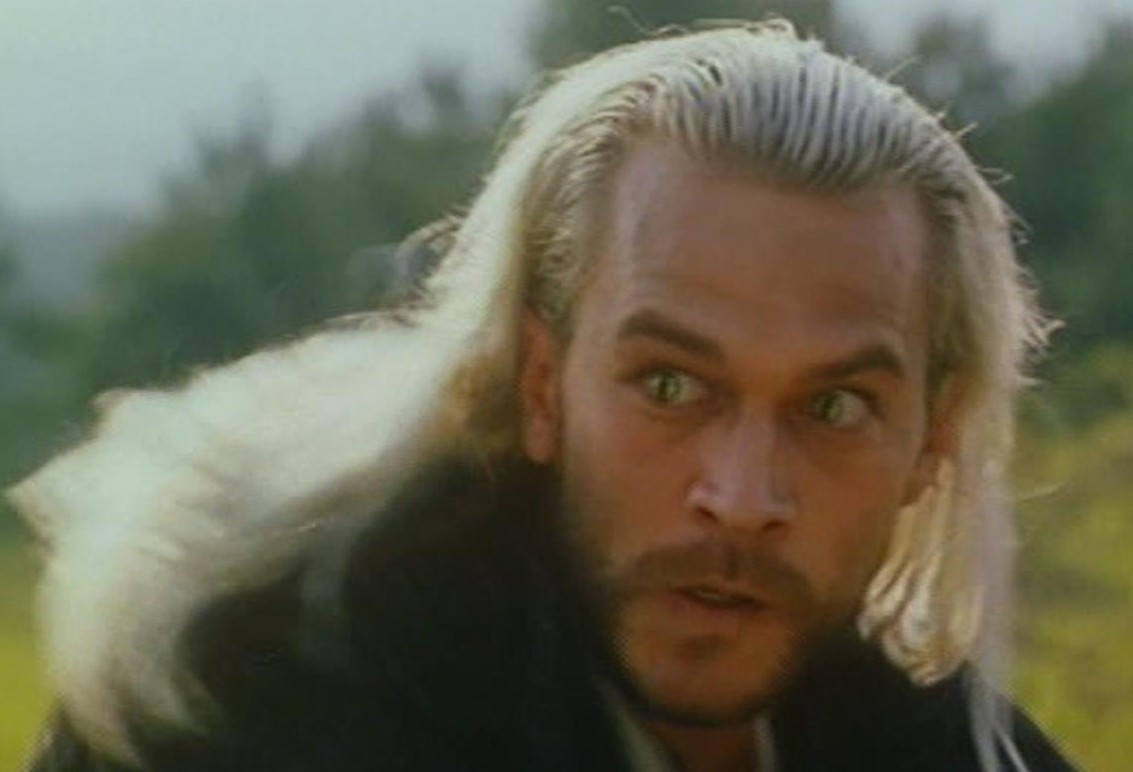
Preconceptions: When not watching movies and writing gush or snark about them, I'm an avid video game fancier, particularly of the fantasy RPG persuasion. While waiting for more Dragon Age, I decided to glut on some other fantasy games to ease my desire to hunt dragons and run around in caves. One of these was the ugly and unbelievably buggy Neverwinter Nights 2 (no real point to commenting on this, except an opportunity to slag a game that was nearly unplayable and a horrendous waste of money) and the other was the surprisingly good the Witcher. Now I was expecting the Witcher to be a passable hack n' slasher, full of amusing dungeon crawls and the occasional pair of animated breasts and taut male behind. To its credit, it held up that end of the bargain, but it was actually pretty good in other ways. The story was fairly complex and didn't patronize (believe me, gaming industry, we can keep up and you don't need to have characters whose entire purpose is to spout the obvious, in case we weren't paying attention). Its moral choices were actual choices. This went beyond the usual pathetically simple good and evil, like: "save village and virtuously refuse reward" or "burn it to the ground and loot the charred corpses" (not that I'm against the occasional charred corpse loot). Having enjoyed the game so much I dug a little deeper (which is to say I dug at all) and discovered it was based on a series of books which were also adapted into a movie.


I was intrigued. Despite his many similarities to Moorcock's Elric (one of my most hated fantasy characters) I had found myself liking Geralt; conflicted, occasionally funny and rather unlikable fellow that he was. Reading further I discovered that the movie was patched together from a TV series, never a good sign. But despite this, I decided it would be fun to see Geralt and company running around in live action, and it also lets me continue my trend of the last few months of bringing weird tid-bits to your attention (oh I'll get back to mainstream stuff soon enough and you'll miss this when it's gone).

General Review: The Hexer is in that unfortunate category of movie that makes a nice book end if you've already read the source material (like the animated New Frontier movie and to a lesser extent Watchmen). If you're a fan, seeing characters you love bouncing around in the flesh is fun and you know the answers to all the things left confusing or unexplained by the movie. For instance, I know that Geralt and his Hexer (or Witcher depending on who's doing the translating) buddies have gone through a mutation (caused by eating the grossest parts of monsters) to make them top notch warrior types. I also know that they all hang out at Kaer Morhen where they drink, discuss how tough they are and how terrible it is to be a mighty, unstoppable fighting force (le sigh). The movie, however, won't be telling you any of this information. It goes well beyond expecting the audience to pay attention and right into withholding vital information. The Hexer is extremely stingy with its back-story giving only the tiniest of hints (if that) to the audience. Hell, I didn't even know the Right of Surprise (an integral bit of plot contrivance) from the game, I remembered it from some fairy tales (another passion of mine, somewhat lower on the list).

Having learned my lesson from Night Watch, I was determined to track down the subbed version, so that I'd know exactly who to blame for any pain I was caused from the dialogue. This time I can tell you, without question, that it was poor writing and translation and in no way the fault of trying to sync up the dubbing. Occasionally it was just stilted, characters proclaiming "I don't like you at all!" and other times it was down right nonsense speak.

The Hexer wasn't all bad translation and ignored exposition, if it had been I wouldn't be drawing your attention to it, I'd have just shuffled it off and tried something else. Whether it was by choice or an accident of editing, the story structure was really cool. Often, when we follow big tough heroes who we're meant to believe are always having off screen adventures, we barely see them have one adventure in the movie. The Hexer gave a real sense of Geralt basically falling from one quest or danger directly into the next one. They weren't all connected to the main plot or helping the character figure out something he needed to know for his development. Nope, a lot of the times Geralt was just having random encounters with monsters and bandits. It's something that should be obvious that I haven't seen much of, in any genre that employs the swashbuckling hero. I enjoyed it and wish some flicks with a better grasp of the basics would steal it.

The visuals weren't impressive. I knew going in that this movie didn't have a spectacular budget and that the effects wouldn't wow me...but really the look of the Hexer owed a lot more to Ladyhawke (worth a look if you enjoy 80's fantasy) and (more laughably) Quest of the Delta Knights than something that came out in this century. The rubber monsters (which I know can look good with the right puppeteer) were straight up Ed Wood-y and the less said about the CG the better (though naturally, I'll show you). Despite the appalling look of the creatures Michal Zebrowski (who played Geralt) was good at reacting to them. Unfortunately, this can't be said for any other actor in the movie, who mostly poked at where the monsters weren't. Zebrowski was also passable in the fight scenes, doing some neat and believable choreography where he manages to spin away from sword cuts rather than needing to parry them. But again, the other poor physical actors took almost all of the fun out of the fights. Also, we appeared to be in the land of the butch facial scars as nearly every male character had at least one.

While Zebrowski wasn't a bad physical actor, the quality of the acting overall (including him) was more Ren Faire than SAG. Surprisingly, Marta Bitner, who played Geralt's tag along kid, was one of the stand outs. She managed to portray a regal bearing and a range of emotions that the rest of the cast lacked.

I've given the Hexer more than a few rough smacks on the bottom via my review (well deserved), but despite this I didn't exactly hate it. If you haven't read the books or played the game, it's going to be extremely muddled and difficult to follow, don't let me mislead you. But the good I did see and my general enjoyment of the game, has piqued my interest enough that I'm going to be picking up the full length TV series and those books.

Aside: Watching the rough and tumble Geralt deal with his mommy issues had me in stitches.

Saturday, October 2, 2010

Girl on Book Action: The Night Watch by Sergei Lukyanenko

The Night Watch by Sergei Lukyanenko
ISBN: 0-385-66365-X

Blurb:


Walking the streets of Moscow, indistinguishable from the rest of its population, are the Others. Each owes allegiance to either the Dark or the Light, two powerful forces that long ago forged an uneasy truce in order to avert chaos and disaster. They watch each other closely, carefully maintaining the world’s precarious balance between good and evil.

Anton, a young Other of the Light, is a Night Watch agent who patrols the streets and subways of the city, protecting ordinary people from the agents – including vampires – of the Dark. On his rounds, Anton comes across a young woman, Svetlana, who is under a powerful curse that threatens to destroy the city, and a boy, Egor, an Other still unaware of his powers, whom Anton narrowly saves from the vampires of the Dark.

Anton and his partner, Olga, a powerful female Other who has been turned into an owl as punishment, work frantically with their Night Watch colleagues – each gifted with their own particular powers – to deflect Svetlana’s curse and to protect Egor from the creatures that pursue him.

***
Aside:  And here you go, my follow-up to Wren's review of the movie adaptation.  Enjoy!

My Thoughts:

As usual when I review a book that also has a movie version that I’ve seen I’m going to try to keep the comparisons to a minimum, but they may creep in here and there.

The first thing I want to address is that I was worried about the translation when I started reading this book, especially when thinking back to Let the Right One In.  I had concerns that some of the prose was problematic for me because of the way it was translated. My fears with regard to The Night Watch were unfounded. Not only was the prose pleasant enough to read, but I don’t have any typos to gripe about!

I really enjoyed that while there was quite a bit of action, the novel was also a meditation on Good and Evil, the boundary between the two, the grey areas. As Anton grows as a character and learns more about both the side of Light – the Night Watch – and the Dark – the Day Watch – the questions of who is right and who is wrong become more and more difficult to answer. Both sides have rules and regulations but they’re in a sort of cold war with small skirmishes and negotiations. The setting and mythology just really appealed to me. The idea of a Balance that needs to be maintained and that any action by either side not only has natural repercussions but also gives the other side the right to retaliate. It’s a book about choices and having to live with the consequences of your actions. And if you've been following for a while, you might recall that I was similarly pleased to find this type of meditation in the Recluse books (you can find the first review here).  The topic is approached in a more gritty, mature way here, so you need not fear that it's repetitive.

The story itself moved at a good clip and there were puzzles, clues, and ethical pondering. Between the mystery, the philosophizing and Anton’s character I kept turning pages. While the notions of Good and Evil are fairly universal, the setting and characters led to a bit of estrangement from these concepts. In some ways, the whole book reads like an intense, drug-induced hallucination and you’re just rushing along in a whirlwind of fantastic events.

The pace of the story was probably one of the few drawbacks of the book – sometimes it felt like things could have been explained more fully or described in more detail. More complete explication would not have detracted from the mysteries and puzzles. I’m mostly thinking about the organization of the two Watches, some of the understanding of how they work is mostly inferred from conversations and events, which is fine in a way, but when you set up a fairly complicated system explaining at least some of it in detail helps. I also would have liked to have seen some more action from the women. There are several female characters, all of them strong, but since the story is told from Anton’s point of view, we only get a limited view of these women.

Wow, did I really get this far without talking about the movie? Good for me and for you, too!

Okay, let me wrap this up. This book and the quality of the translation pleasantly surprised me. The setting and characters are memorable and make the pages fly past. I recommend this one and will be looking to get part two, Day Watch in the near future.